Showing posts with label risk analysis. Show all posts

5/31/2012

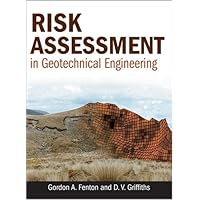
Risk Assessment in Geotechnical Engineering Review

Risk Assessment in Geotechnical Engineering
Average Reviews:

(More customer reviews)
Two years ago when I started my masters in structural engineering, I had to learn about random field theory. The books that I found, considered the "must reads" for random field theory, might as well have been in Chinese (I don't understand Chinese - just for the record). It was extremely painful and frustrating trying to understand the completely not clear or easy to understand concepts - as they were presented in those books. Upon searching the internet, I found some papers written by Gordon Fenton. His description of random field theory and his work in general, was like an oasis in the desert. This is one very rare person who can explain complicated concepts so that they are easy to understand and apply. So when I found out he was publishing a book, I thought, this is a must have. And I haven't been disappointed. The first section on probability theory is without a doubt, the best explanation of the theory I have seen, with simple examples to help me concrete my understanding of the theory being presented. Therefore, this is the first textbook that I would recommend for people trying to understand the concepts of probability theory. Similarly, all other sections in the book are equally easy to understand and can make even me look intelligent - as he enables me to really understand the concepts being presented, because of his fantastic ability to communicate ' I like in particular, how he explains the practical reasons for why the theory can be simplified or assumptions can be made. Most boffin writers of textbooks don't explain "the obvious" which is not so obvious to the novice person reading their books. Sometimes I think that they don't realise that not everybody has done the mathematics degree required to understand some of the intricacies, which if not clearly explained, can stump the reader for days until they find out why they have assumed this or that. That's where Gordon Fenton is a real a gem. He doesn't leave you scratching your head, scrambling for other textbooks to fill in the gaps before you can continue with his explanations. So I highly recommend this book to anybody trying to understand probability theory, random field theory, estimation, reliability, Monte Carlo simulation and all other topics he covers in his book.

Click Here to see more reviews about: Risk Assessment in Geotechnical Engineering

NEW PROBABILISTIC APPROACHES FOR REALISTIC RISK ASSESSMENT IN GEOTECHNICAL ENGINEERING.
This text presents a thorough examination of the theories and methodologies available for risk assessment in geotechnical engineering, spanning the full range from established single-variable and "first order" methods to the most recent, advanced numerical developments. In response to the growing application of LRFD methodologies in geotechnical design, coupled with increased demand for risk assessments from clients ranging from regulatory agencies to insurance companies, authors Fenton and Griffiths have introduced an innovative reliability-based risk assessment method, the Random Finite Element Method (RFEM). The authors have spent more than fifteen years developing this statistically based method for modeling the real spatial variability of soils and rocks. As demonstrated in the book, RFEM performs better in real-world applications than traditional risk assessment tools that do not properly account for the spatial variability of geomaterials.
This text is divided into two parts:
Part One, Theory, explains the theory underlying risk assessment methods in geotechnical engineering. This part's seven chapters feature more than 100 worked examples, enabling you to develop a detailed understanding of the methods.
Part Two, Practice, demonstrates how to use advanced probabilistic tools for several classical geotechnical engineering applications. Working with the RFEM, the authors show how to assess risk in problems familiar to all geotechnical engineers.
All the programs used for the geotechnical applications discussed in Part Two may be downloaded from the authors' Web site at www.engmath.dal.ca/rfem/ at no charge, enabling you to duplicate the authors' results and experiment with your own data. In short, you get all the theory and practical guidance you need to apply the most advanced probabilistic approaches for managing uncertainty in geotechnical design.

Buy NowGet 21% OFF

Click here for more information about Risk Assessment in Geotechnical Engineering

Read More...

4/12/2012

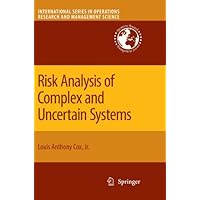
Risk Analysis of Complex and Uncertain Systems (International Series in Operations Research & Management Science) Review

Risk Analysis of Complex and Uncertain Systems (International Series in Operations Research and Management Science)
Average Reviews:

(More customer reviews)
This is an excellent, approachable read for any risk manager; understanding its examples requires only elementary probability, statistics and calculus, though the foundations are much deeper. The author uses direct language, and does not hesitate to declare a fashionable risk analysis technique "worse than useless." The author shows how not to do risk analysis, using simple but devastating examples to illustrate the weaknesses of prioritized investments, subject matter expert opinion, risk matrices and qualitative risk assessments, and the independence assumption. Then, case studies present constructive examples of good practice. Refreshingly, this text clearly distinguishes between threats from Mother Nature, and those posed by an intelligent adversary. There is unevenness, because this is an edited ensemble of papers originally published in a variety of technical journals; however, this is also a strength, because the appeal and scholarship underlying biological, engineering, and social science examples is broad. This is not a how-to guide, and won't help fill in a blank page risk analysis; however, this is an excellent source for the skeptical consumer of contemporary risk management advice and products, and hopefully will have some influence with policy makers who are the source of simplistic and dangerous guidance.

Gerald G. Brown
Distinguished Professor of Operations Research
Naval Postgraduate School
National Academy of Engineering
INFORMS Fellow


Click Here to see more reviews about: Risk Analysis of Complex and Uncertain Systems (International Series in Operations Research & Management Science)

In Risk Analysis of Complex and Uncertain Systems acknowledged risk authority Tony Cox shows all risk practitioners how Quantitative Risk Assessment (QRA) can be used to improve risk management decisions and policies. It develops and illustrates QRA methods for complex and uncertain biological, engineering, and social systems - systems that have behaviors that are just too complex to be modeled accurately in detail with high confidence - and shows how they can be applied to applications including assessing and managing risks from chemical carcinogens, antibiotic resistance, mad cow disease, terrorist attacks, and accidental or deliberate failures in telecommunications network infrastructure. This book was written for a broad range of practitioners, including decision risk analysts, operations researchers and management scientists, quantitative policy analysts, economists, health and safety risk assessors, engineers, and modelers.

Buy Now

Click here for more information about Risk Analysis of Complex and Uncertain Systems (International Series in Operations Research & Management Science)

Read More...

12/11/2011

Financial Modelling in Practice: A Concise Guide for Intermediate and Advanced Level (The Wiley Finance Series) Review

Financial Modelling in Practice: A Concise Guide for Intermediate and Advanced Level (The Wiley Finance Series)
Average Reviews:

(More customer reviews)
Michael Rees succeeds to a large extent in his endeavor of writing a text that addresses the financial modeling process instead of Excel functionality, financial theory, or mathematical models. To his credit, Rees has put together a large number of useful modeling examples in the CD-ROM that is sold with the text. Rees' book assumes that readers have at least an intermediate knowledge of both statistical and financial concepts.
After reviewing select Excel functions and tools relevant to financial modeling, Rees gives his audience of modelers many practical tips about how to design, structure, and build models that are relevant, accurate, and easily understandable. Whoever has experience with models will probably agree with Rees when he writes that the majority of models built are in practice of mediocre quality. Someone other than the author of the model will often experience several challenges in dealing with the model at hand, i.e., too much time spent on understanding the model, complexity of the auditing and validating processes, hard to share with others, over-reliance on the original modeler to maintain or use it, lack of clarity of objectives, and presence of errors and implicit assumptions.
Rees then goes into the modeling of financial statements that is often required in the world of corporate finance for forecasting profit and cash, assessing financing requirements, analyzing credit risk and valuation, etc. This chapter is a little gem. It contains many practical tips. Once again, readers will be reminded that there is not always 100% agreement on the definition of some financial concepts.
Rees then uses Palisade Corporation's add-ins @RISK and PrecisionTree for many modeling examples in the two chapters that he dedicates to risk modeling and real option modeling, respectively. Having some understanding of both statistical and financial concepts is particularly important here to benefit from reading both chapters. Probably, many readers with an advanced knowledge of Excel 2007 will regret that the above-mentioned functionality that Palisade Corporation offers has not yet been systematically integrated into at least Microsoft Office Professional.
Finally, Rees discusses the use of Visual Basic for Applications (VBA) in a range of practical financial modeling situations. Rees points out that many otherwise competent modelers never learn VBA. For this reason, Rees makes the assumption that his audience is not very familiar with VBA. Rees shows how macros, i.e., subroutines and user-defined functions, can be used in a variety of modeling contexts.
In conclusion, Rees has made a valuable contribution to the field of financial modeling. The CD-ROM that is sold with the text plays a key role in achieving this objective.


Click Here to see more reviews about: Financial Modelling in Practice: A Concise Guide for Intermediate and Advanced Level (The Wiley Finance Series)

Financial Modelling in Practice: A Concise Guide for Intermediate and Advanced Level is a practical, comprehensive and in-depth guide to financial modelling designed to cover the modelling issues that are relevant to facilitate the construction of robust and readily understandable models.
Based on the authors extensive experience of building models in business and finance, and of training others how to do so this book starts with a review of Excel functions that are generally most relevant for building intermediate and advanced level models (such as Lookup functions, database and statistical functions and so on). It then discusses the principles involved in designing, structuring and building relevant, accurate and readily understandable models (including the use of sensitivity analysis techniques) before covering key application areas, such as the modelling of financial statements, of cash flow valuation, risk analysis, options and real options. Finally, the topic of financial modelling using VBA is treated. Practical examples are used throughout and model examples are included in the attached CD-ROM.
Aimed at intermediate and advanced level modellers in Excel who wish to extend and consolidate their knowledge, this book is focused, practical, and application-driven, facilitating knowledge to build or audit a much wider range of financial models.
Note: CD-ROM/DVD and other supplementary materials are not included as part of eBook file.

Buy NowGet 43% OFF

Click here for more information about Financial Modelling in Practice: A Concise Guide for Intermediate and Advanced Level (The Wiley Finance Series)

Read More...